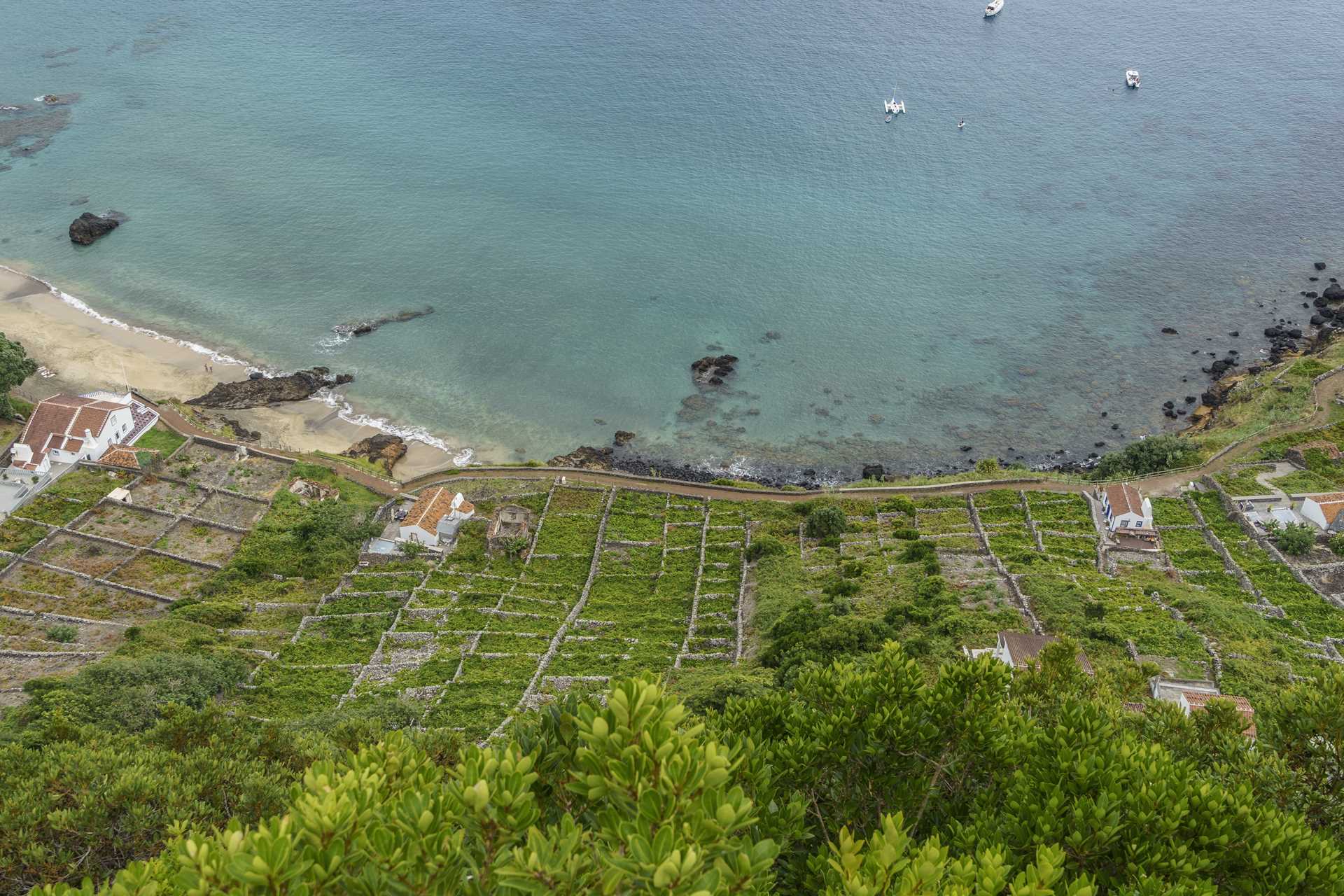
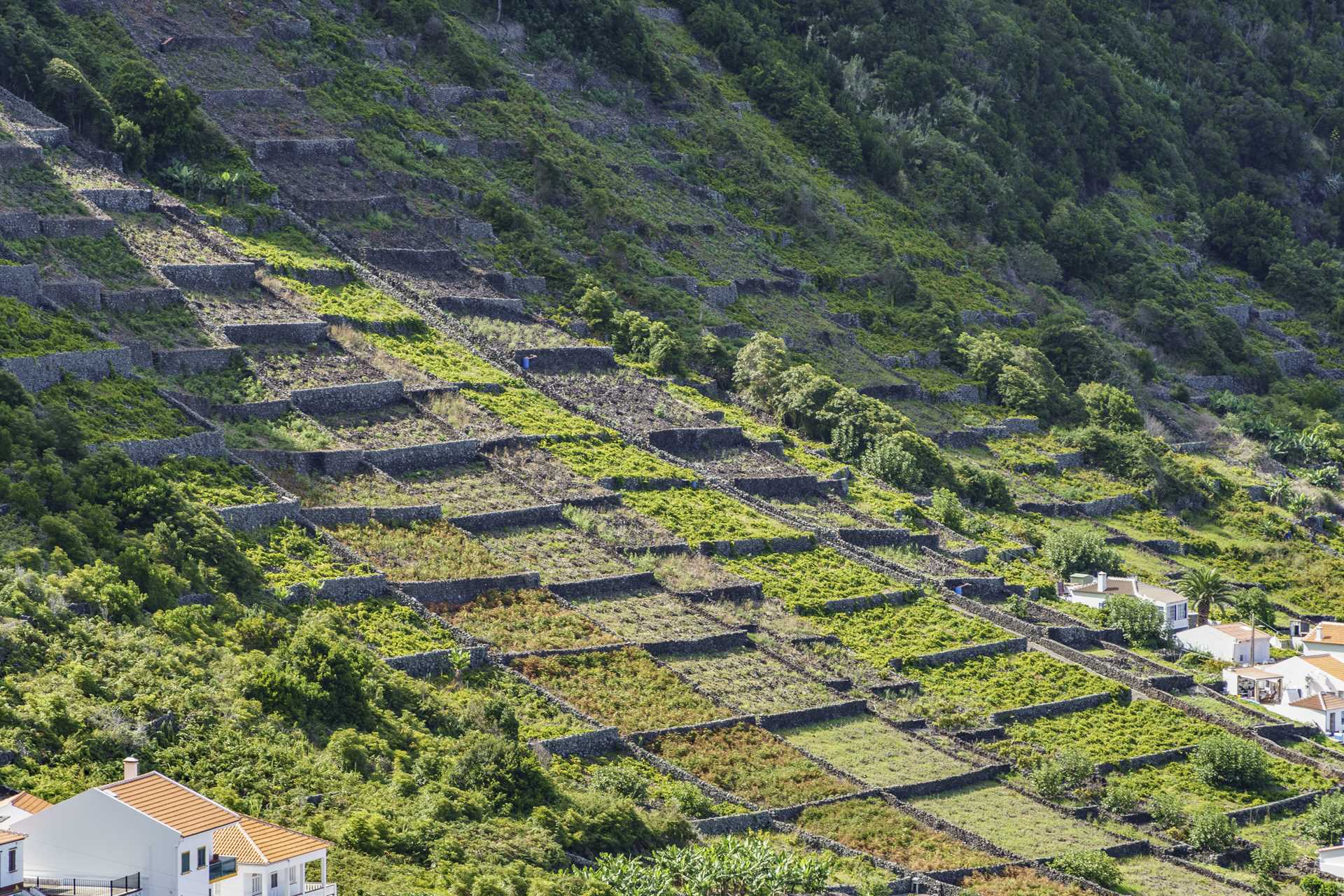
In Santa Maria, viticulture is even more unlikely than in Biscoitos, on Terceira Island, or on the rocky outcrops of Pico. Few options remain but to plant vines on the slopes, in terraces that unfold up the cliffs, in a true spectacle of nature, under the open sky and with a view of the sea.
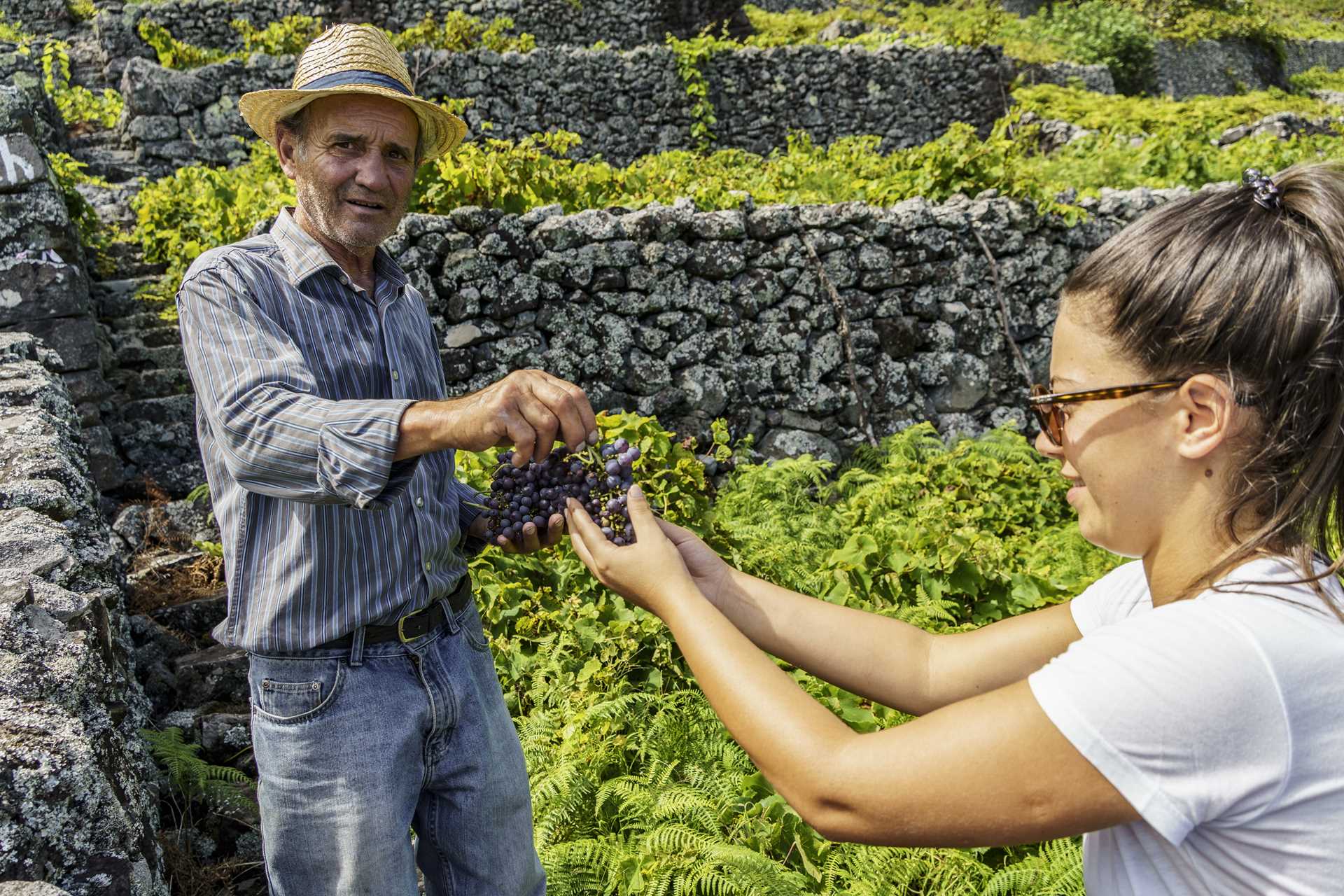
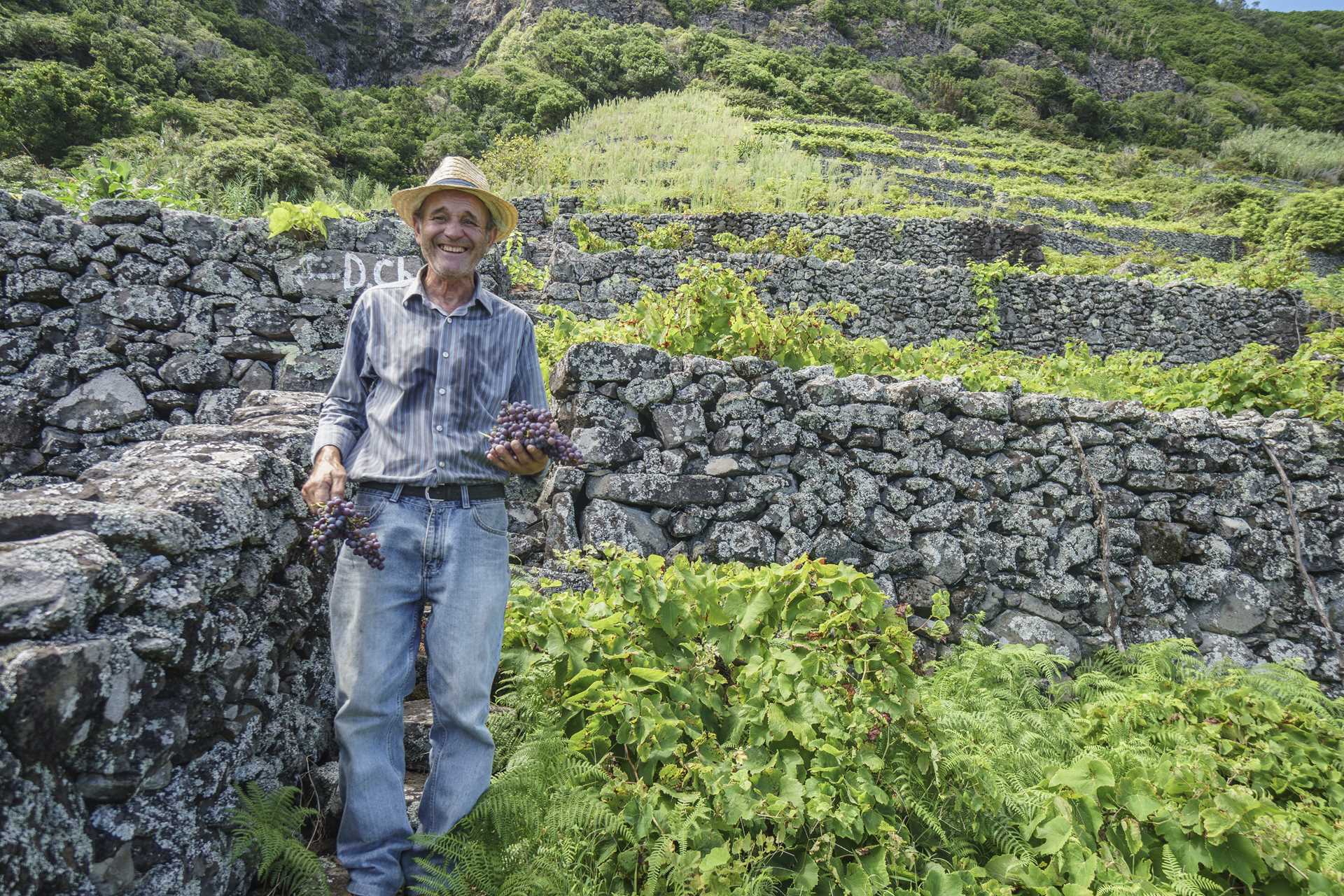
In the Baía de São Lourenço, turning our backs to the sea, our gaze is lost in the green of the terraced vineyards, some abandoned and others already restored, in work that is inaccessible to machines and made possible by the strength of those who strive to keep this legacy alive. In São Lourenço, we suggest looking for Mr. António da Margarida, a former “curraletas” builder, who is willing to share with those who seek him out the secrets and stages of this demanding craft of placing stone upon stone.
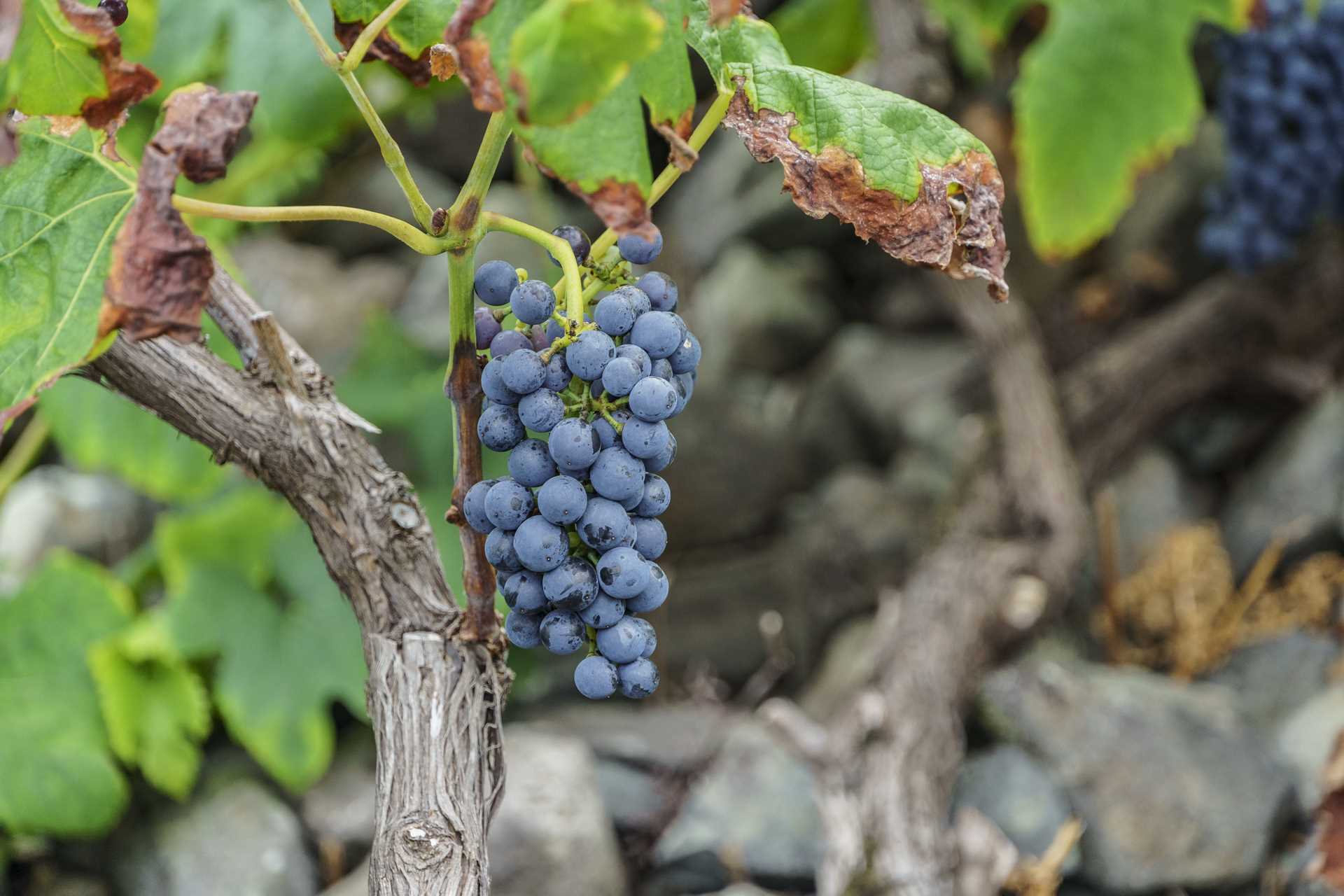
The best way to celebrate this incredible feat, accomplished by the Azoreans' ancestors is, undoubtedly, to fall in love with the wine produced here, by over 300 small producers, who keep this century-old tradition alive in their small vineyard terraces.
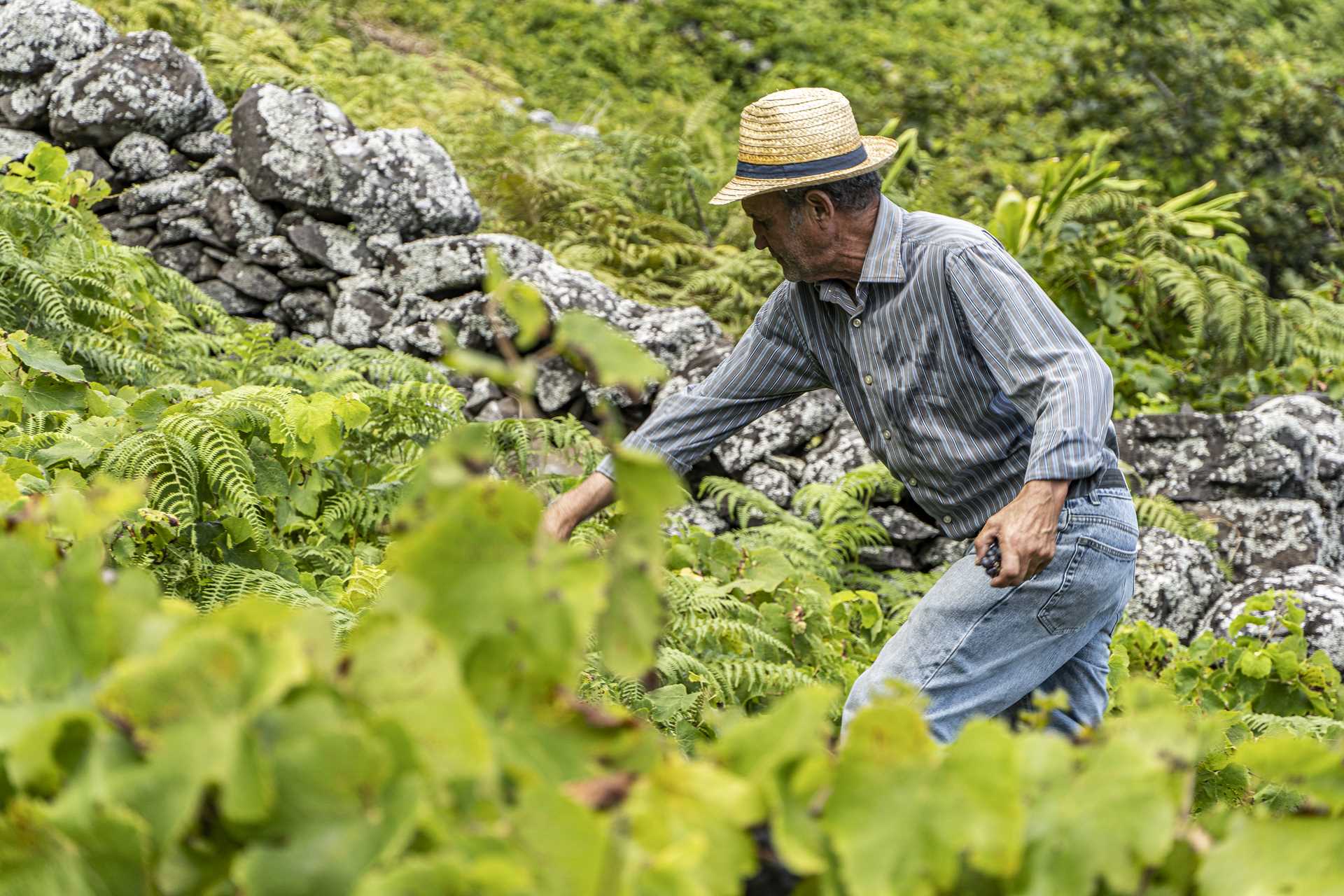
After a short walking tour to admire this unmissable vineyard landscape, we suggest a vineyard experience and tasting with Producer Maurício Travassos, who works the lands that once belonged to his grandfather in São Lourenço and to his father in Relva D’Além. For over 10 years, he has dedicated himself to tending his vineyard plots, which have been part of the family for generations. Producing only for personal consumption, to share with family and friends, Maurício Travassos keeps his doors open to anyone who wishes to learn more about the viticultural history of his island, taste the wine he produces out of passion and persistence, or even roll up their sleeves and take part in the various agricultural tasks—thinning in January, pruning in March, and harvesting in September.