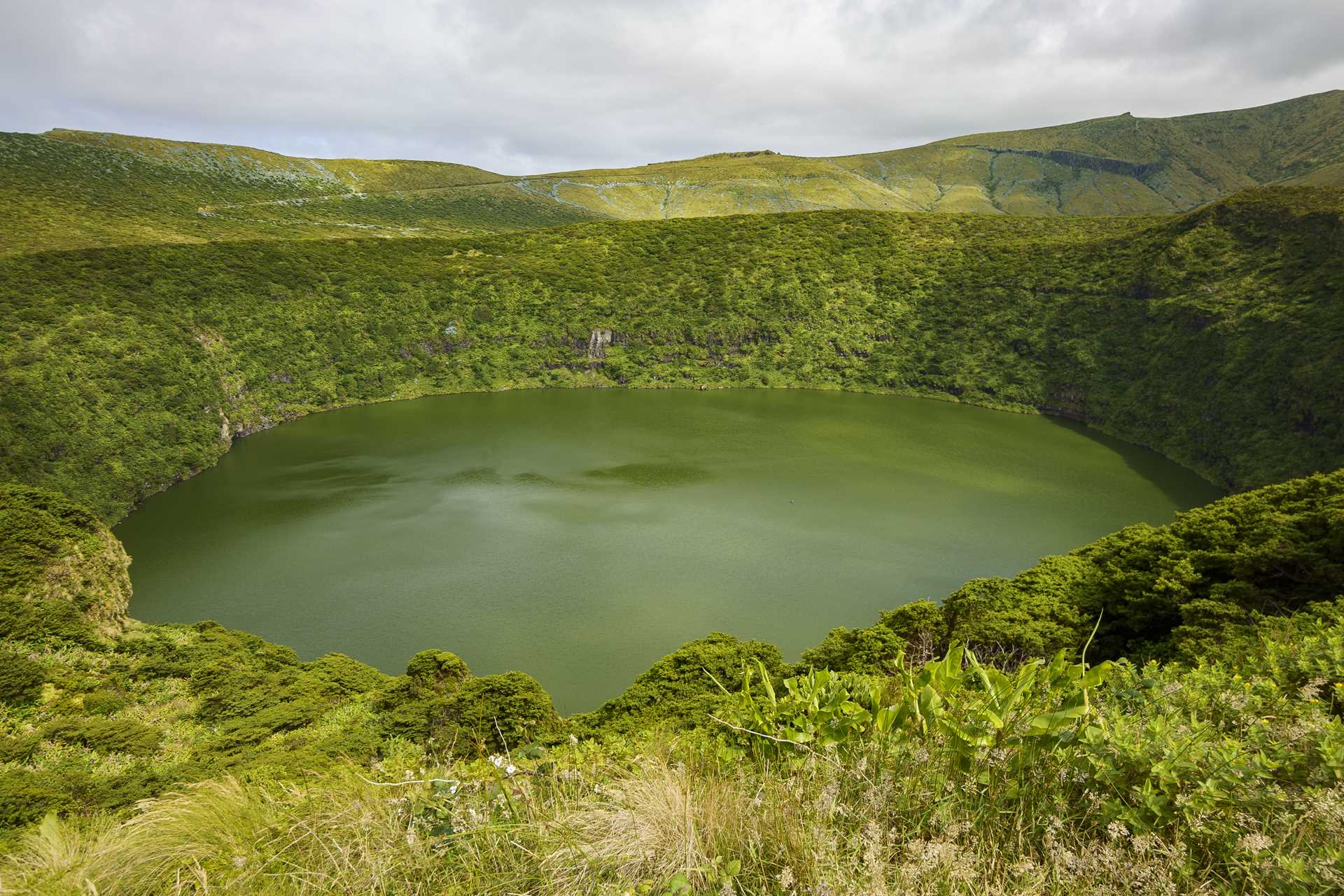
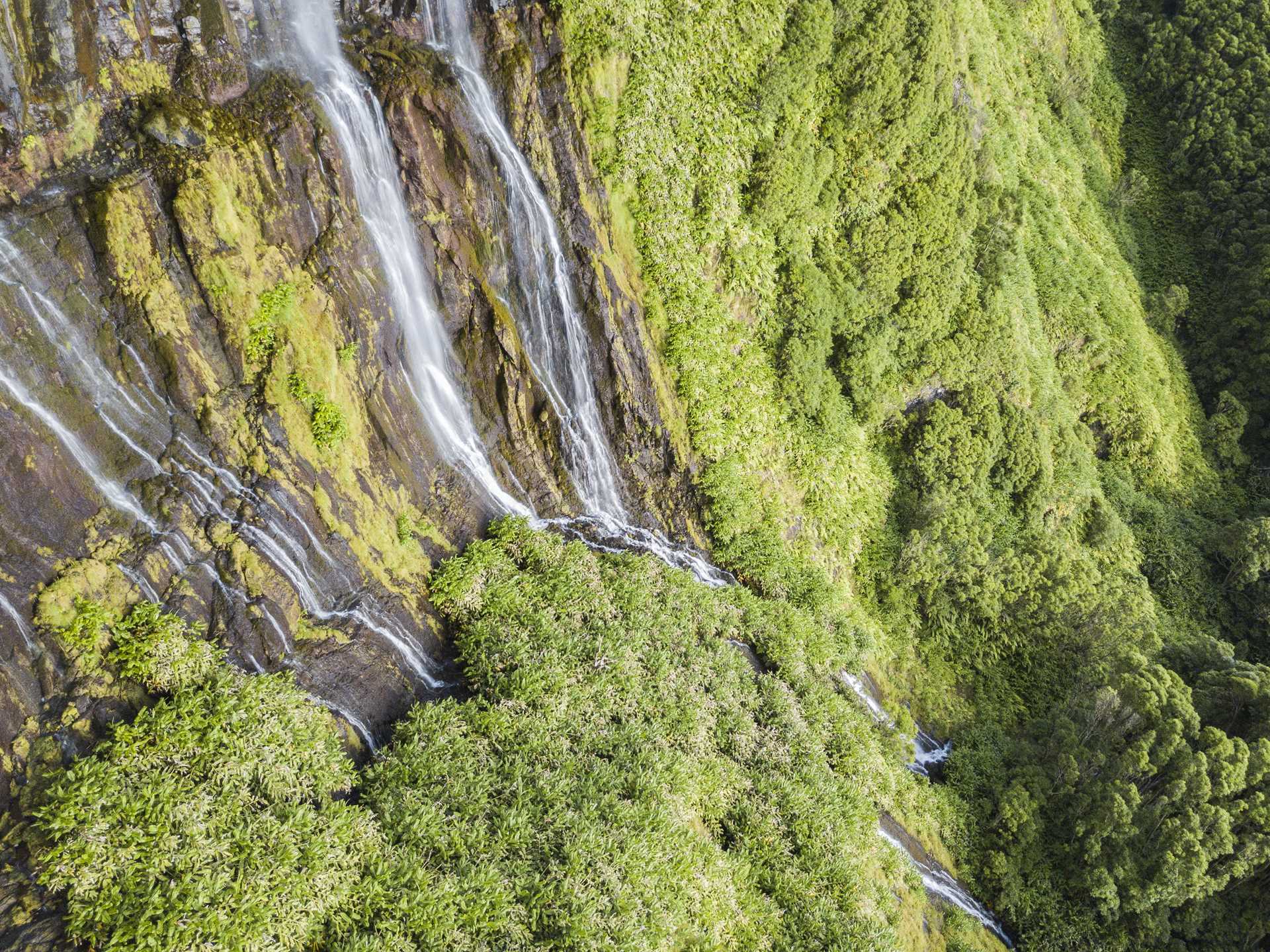
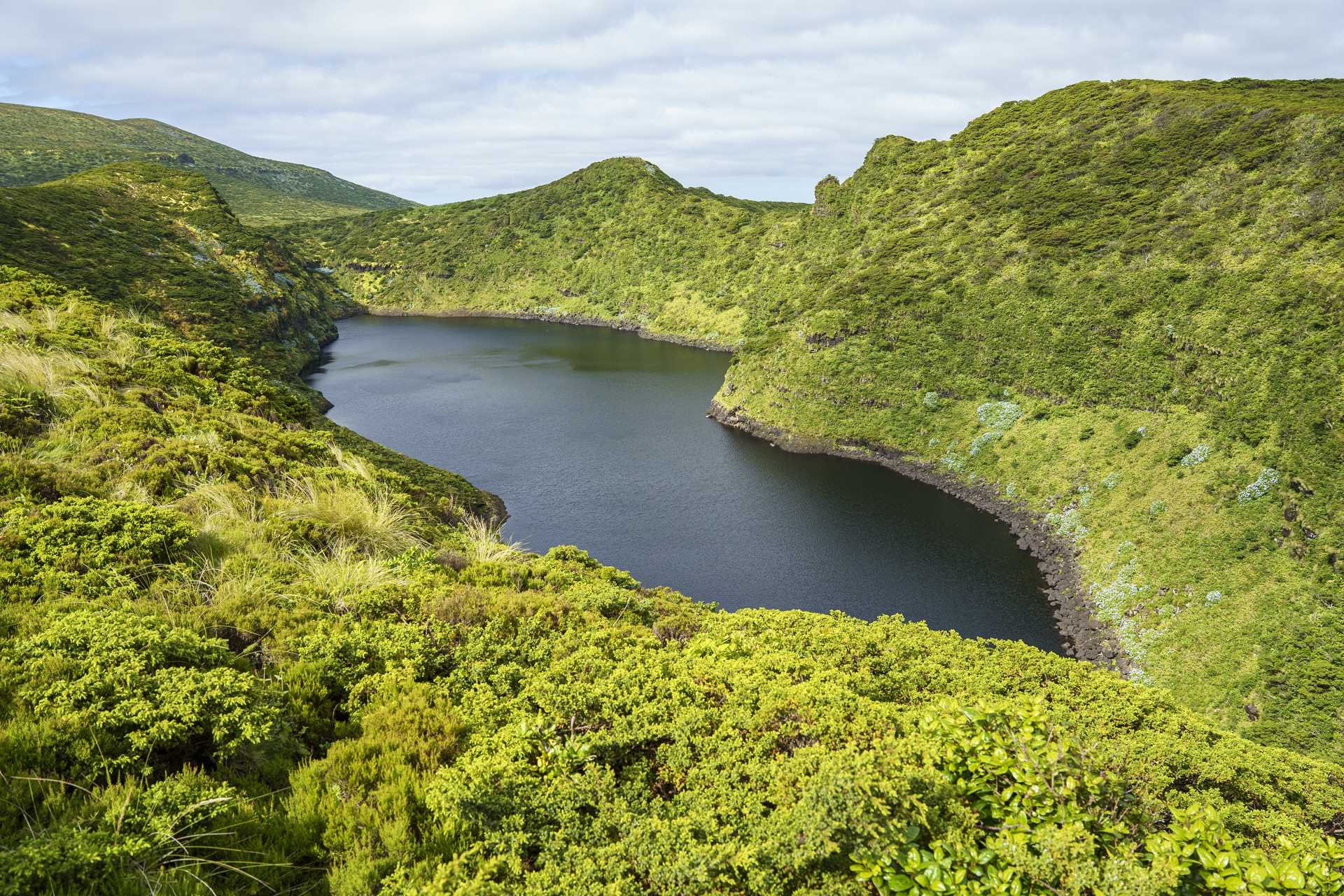
The island of Flores has a very unique and stunning landscape shaped by important hydrographic basins and the presence of several ancient volcanic cones. Along several waterfalls and lagoons, this itinerary presents you an incredible island, whose abundance of water, source of life, has shaped both the landscapes and the locals' experiences.
The Centro de Interpretação Ambiental do Boqueirão, the first stop on the visit, is a space dedicated to education and awareness, and one of the island’s most environmentally significant sites.
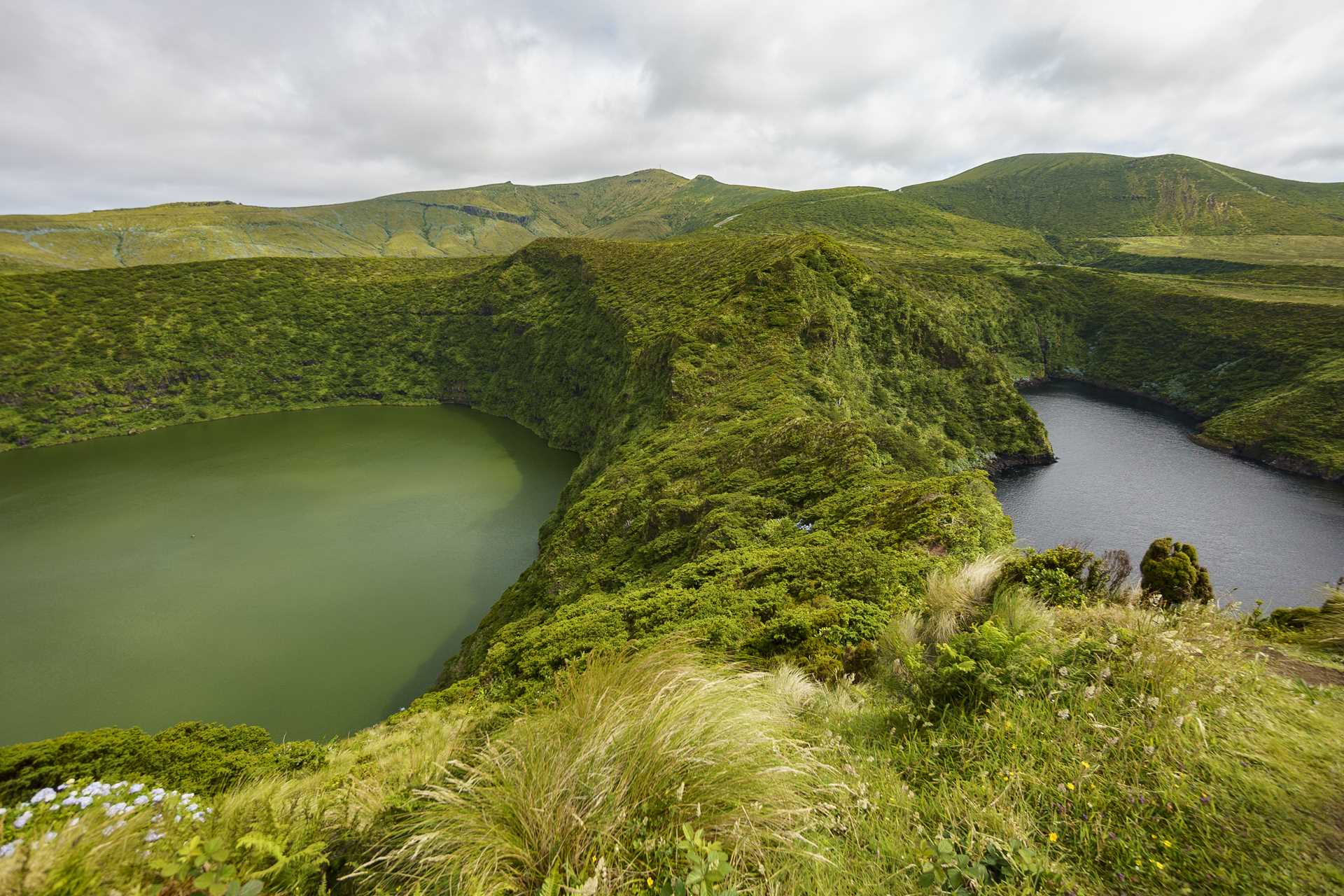
We continue to the Planalto Central to appreciate the uniqueness of four of the island’s seven calderas—Caldeira Branca, Caldeira Seca, Caldeira Comprida, and Caldeira Negra—requiring a short walking trail with a stop at the viewpoint to observe the latter two simultaneously. Caldeira Negra is notable for being the deepest in the archipelago. Throughout the geosite, it is possible to enjoy the beautiful panoramic views offered by this geological landscape.
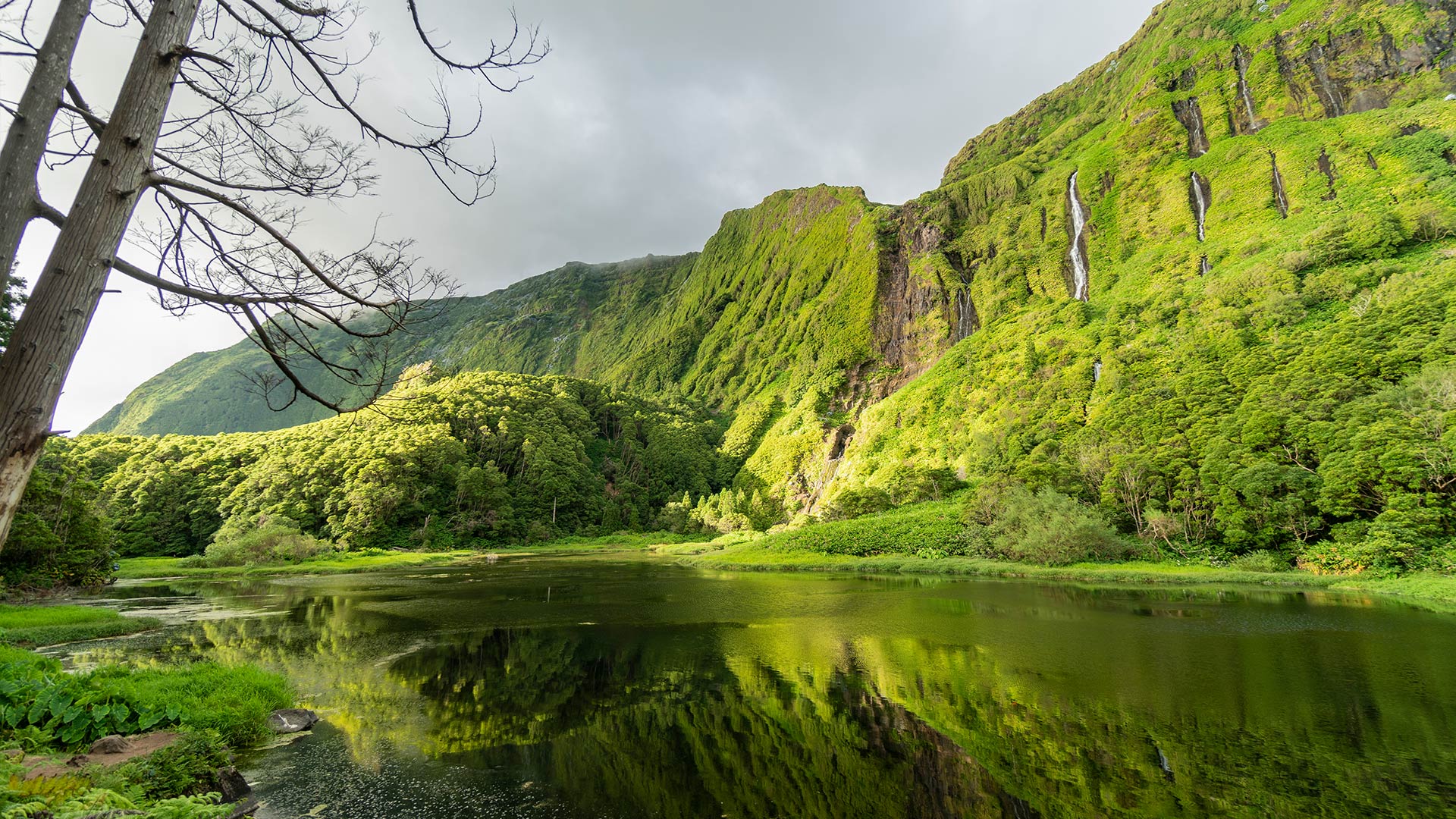
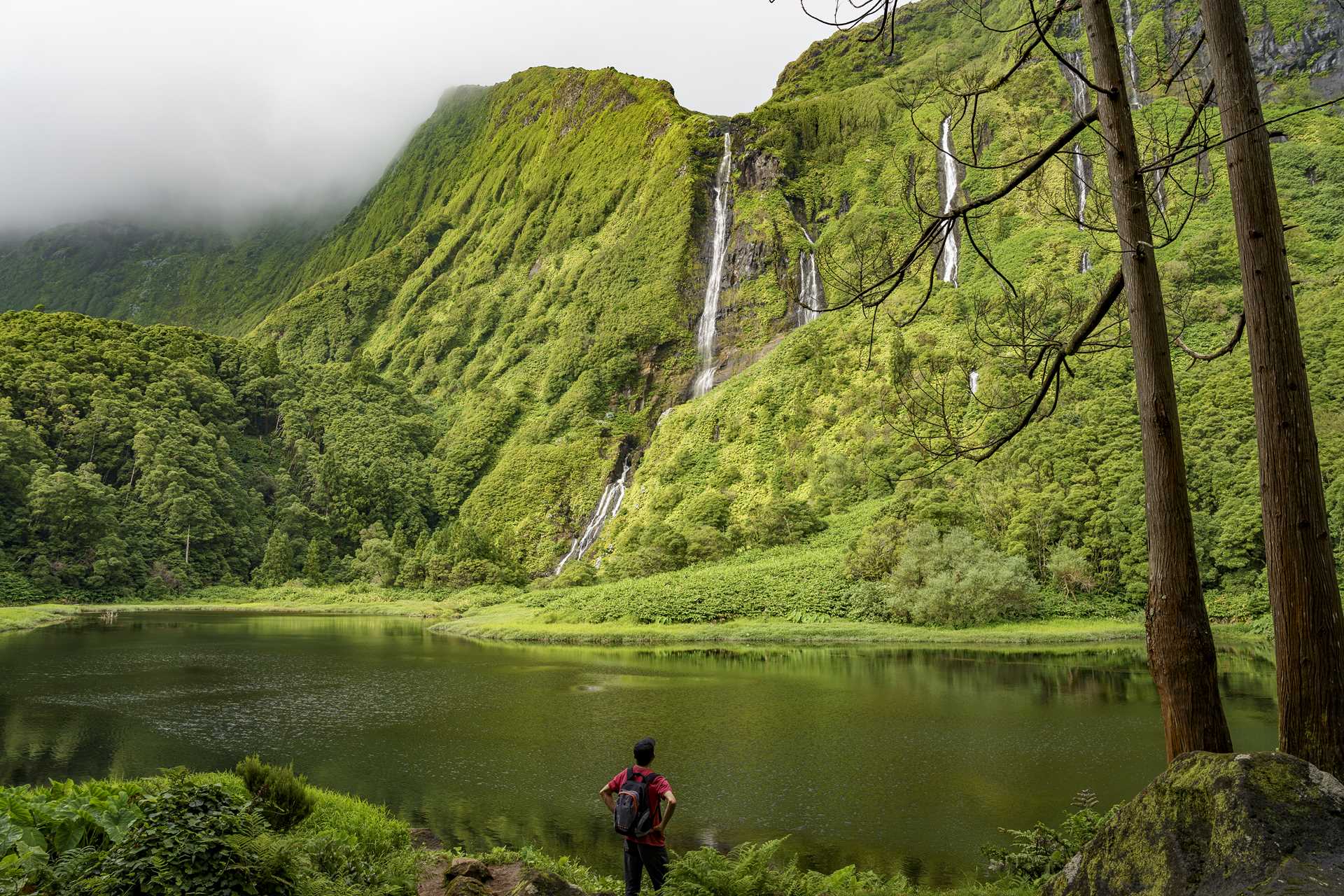
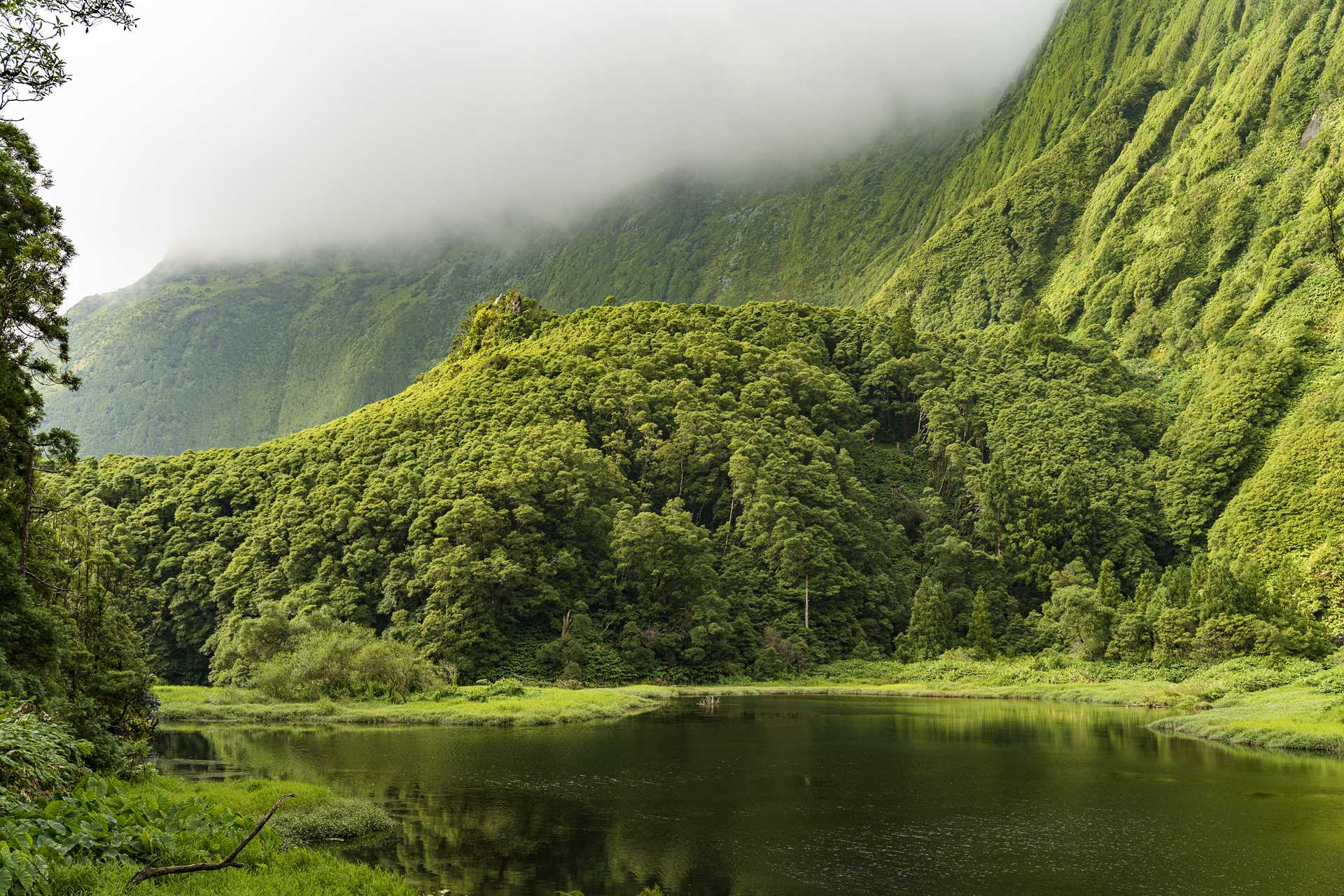
After lunch, we continue to Fajã Grande, covered by sediments constantly brought down by watercourses (such as Ribeira Grande), to admire one of the most beautiful coastal landscapes in the Azores. This fossil cliff, about 300 metres high, separates the fajãs from the island’s central plateau and features numerous waterfalls that feed permanent bodies of water at its base. These water bodies are locally known as “poços”, one of the most famous being Poço do Bacalhau, fed by a waterfall approximately 90 metres high—a truly idyllic place where it is possible to take a swim.
Next, we will take a short break to admire the famous Ilhéu de Monchique, the westernmost point of Europe, located about 1,500 metres off the west coast of Flores Island. Historically, it played a key role in supporting navigation, serving as a reference point for course corrections and for checking navigational instruments.
We continue to Poço da Ribeira do Ferreiro, along a path of rounded stones, a visit well worth highlighting as it is considered by many to be a paradisiacal place, with its steep cliff from which the waters of the numerous waterfalls emerge.
Finally, we also have the opportunity to visit the Moinho de Água da Alagoa, one of the few remaining watermills on the island that is still in operation. A visit not to be missed, where visitors can easily understand the use of hydraulic energy, harnessed to serve the local community and used to grind cereals, especially corn, which is very abundant on Flores Island.